Architecture route
Baku for architecture lovers: three city layers
A practical way to read Baku through its Walled City, oil-boom streets and contemporary projects, without pretending to cover every era.
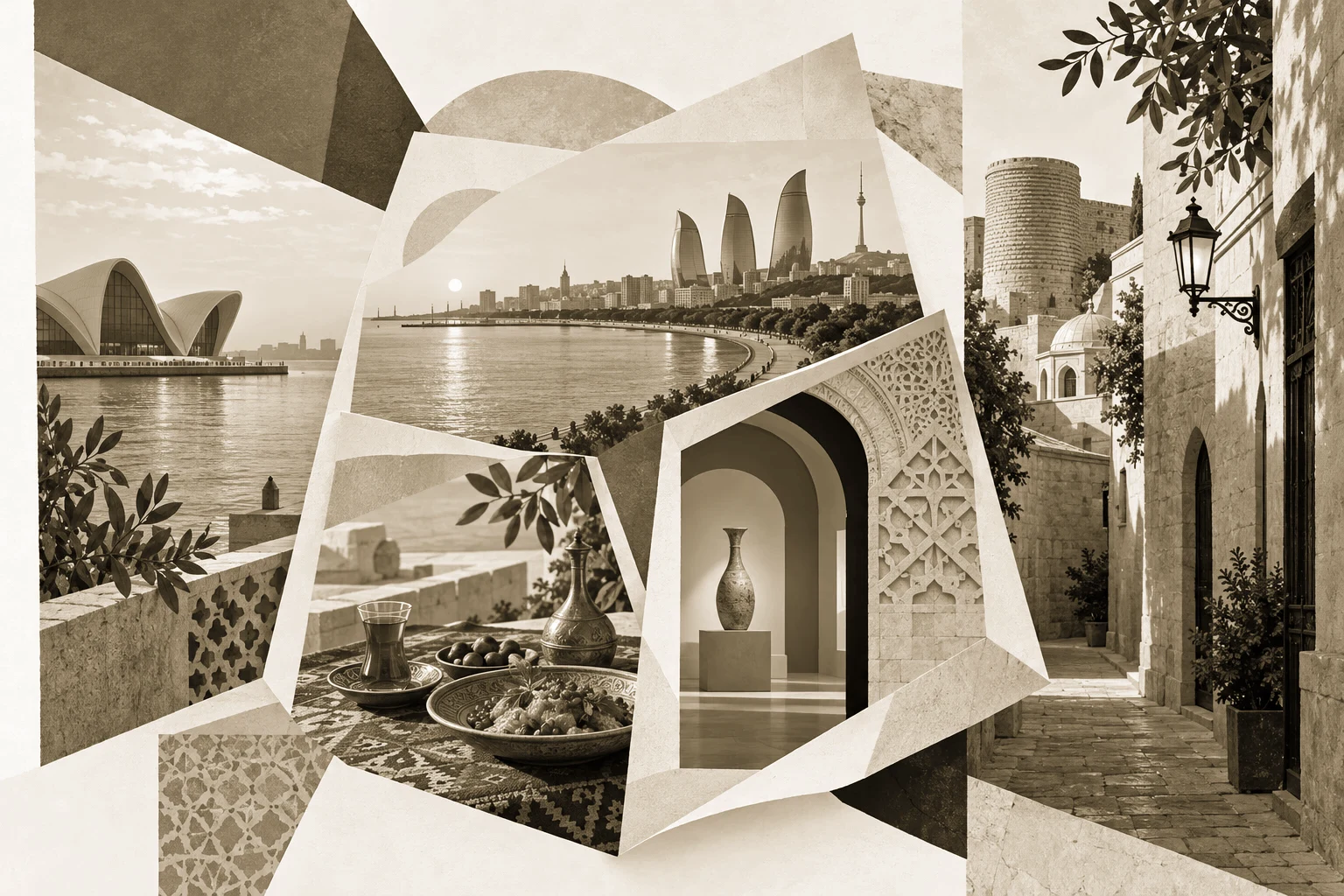
Short answer
Baku can be read as three useful layers: the UNESCO-listed Walled City with the Shirvanshahs' Palace and Maiden Tower, the late nineteenth and early twentieth-century oil-boom streets around the Old City, and a separate modern architecture directory that includes Baku examples. These layers are a visitor's frame, not a complete chronology.
Choose your Baku architecture layer
Each layer suits a different pace and interest. Use these four decisions to shape your route.
Start with the Walled City
UNESCO describes Baku's Walled City as a historic urban ensemble containing the Shirvanshahs' Palace and Maiden Tower. This is the most compact layer and works well for a first morning. The source covers the historic ensemble, not a complete chronology of the city.
Walk the oil-boom streets
Azerbaijan Travel describes a distinct late nineteenth and early twentieth-century architectural layer created during rapid oil-boom growth around the Old City. This layer is best explored on foot after the Walled City. Building attributions require separate sources, so treat the layer as a broad period.
Use the modern architecture directory
Azerbaijan Travel's architecture directory separately groups modern architecture and includes Baku examples. Use it as a discovery taxonomy, not a ranking or completeness claim. This helps you pick contemporary projects without assuming every modern building is listed.
Combine layers by walking distance
The three layers sit close enough to combine in one day if you keep a steady pace. Start inside the Walled City, move outward through the oil-boom streets, then use the modern directory to choose one or two contemporary stops. The sources do not provide an official route, so adjust the order to your own time.
The Walled City as a historic ensemble
UNESCO describes Baku's Walled City as a historic urban ensemble containing the Shirvanshahs' Palace and Maiden Tower. This layer is the most self-contained part of the route and rewards slow walking. The source covers the historic ensemble, not a complete chronology of Baku, so treat it as one layer among several.
Because the Walled City is compact, you can see the two named monuments and still have time for the surrounding streets. The UNESCO description does not provide a building-by-building itinerary, so use it to anchor the layer rather than to plan every stop.
Shirvanshahs' Palace
Named by UNESCO as part of the historic urban ensemble. The source does not give opening hours or ticket prices, so check locally before visiting.
Maiden Tower
Also named by UNESCO within the Walled City ensemble. The source describes it as part of the historic layer, not as a standalone attraction with a full history.
Reading the oil-boom streets
Azerbaijan Travel describes a distinct late nineteenth and early twentieth-century architectural layer created during rapid oil-boom growth around the Old City. This layer is broader than a single street and works best as a walking zone rather than a checklist.
The source gives a period and a geography, not individual building attributions. If you want to know who designed a specific facade, you will need separate sources. For a visitor, the useful move is to recognise the layer's character and let the streets guide you.
Period
Late nineteenth and early twentieth century, tied to rapid oil-boom growth. The source does not give exact start and end dates for every building.
Geography
Around the Old City, which makes it a natural second layer after the Walled City. The source does not map every street, so use it as a broad zone.
Modern architecture as a directory, not a ranking
Azerbaijan Travel's architecture directory separately groups modern architecture and includes Baku examples. This is a discovery taxonomy, not a completeness claim. Use it to find contemporary projects without assuming the directory lists every modern building in the city.
Because the directory groups modern architecture separately, it helps you avoid mixing the oil-boom layer with later projects. Pick one or two entries that interest you and treat them as a third layer, not as the final word on Baku's contemporary scene.
Directory scope
Separately groups modern architecture and includes Baku examples. The source does not rank projects or claim completeness.
Visitor use
Use it to choose contemporary stops after the historic layers. The source is a taxonomy, not an official route.
Frequently asked questions
Is Baku's Walled City a UNESCO site?
Yes. UNESCO describes Baku's Walled City as a historic urban ensemble containing the Shirvanshahs' Palace and Maiden Tower. The source covers the historic ensemble, not a complete chronology of the city.
What is the oil-boom architectural layer in Baku?
Azerbaijan Travel describes a distinct late nineteenth and early twentieth-century architectural layer created during rapid oil-boom growth around the Old City. Building attributions require separate sources.
Where can I find modern architecture in Baku?
Azerbaijan Travel's architecture directory separately groups modern architecture and includes Baku examples. Use it as a discovery taxonomy, not a ranking or completeness claim.
Can I see all three layers in one day?
The three layers sit close enough to combine in one day if you keep a steady pace. The sources do not provide an official route, so adjust the order to your own time.
Does the UNESCO description cover all of Baku's history?
No. UNESCO describes the Walled City as a historic urban ensemble, not a complete chronology of Baku. Treat it as one layer among several.
Does the modern architecture directory list every contemporary building?
No. The directory separately groups modern architecture and includes Baku examples, but it is a discovery taxonomy, not a completeness claim.